Buying guide
The Best Water Filters for Well Water
Test the water first. Then choose the filter that fixes the problem your test found. This guide helps you match germs, iron, hard water, nitrate, arsenic, and sediment to the right kind of system.
The quick answer
- Iron or black stains: iSpring WGB32BM, but only within its tested limits.
- Bacteria risk: VIQUA VH200 as part of a planned system with proper pretreatment.
- Hard water and scale: DuraWater softener with Fleck 5600SXT.
- Nitrate or pentavalent arsenic at one tap: AquaTru Classic when its exact claim fits your lab result.
- Strong sulfur odor or iron above 3 ppm: SpringWell WS is the premium backwashing option here, but only after SpringWell reviews a complete water test.
Do not buy yet if the water may be unsafe
Use another safe water source if a test finds E. coli, after a flood, after a fuel spill, or when a health department says not to drink the water. Fix the well problem first. A checkout button is not an emergency plan.
Match the test result to the right job
| Your result | Start with | Do not expect | Best next step |
|---|---|---|---|
| Bacteria | Repair and disinfect the well; add UV when the plan calls for it | A carbon or sediment filter to make unsafe water safe | Repeat a lab test after the work |
| Iron up to 3 ppm or manganese up to 1 ppm | WGB32BM may fit | Hardness, germs, or sulfur treatment | Check pH, iron form, pressure, and finished water |
| Higher iron or sulfur odor | A sized oxidation and backwashing system | A small cartridge system to handle every well | Get two written plans based on the same lab report |
| Hard water | An ion-exchange softener | A carbon filter or electronic device to remove hardness | Size from grains per gallon and daily use |
| Nitrate or arsenic | An exact certified claim, often RO at the kitchen tap | A generic whole-house carbon filter | Test the finished drinking water |
| Sand or sediment | Find the source and measure the particle load | One fine filter that plugs over and over | Protect later stages and watch pressure loss |
Best choices by need
Price bands help with planning. Retailer prices and configurations can change. Each button opens the exact model shown.
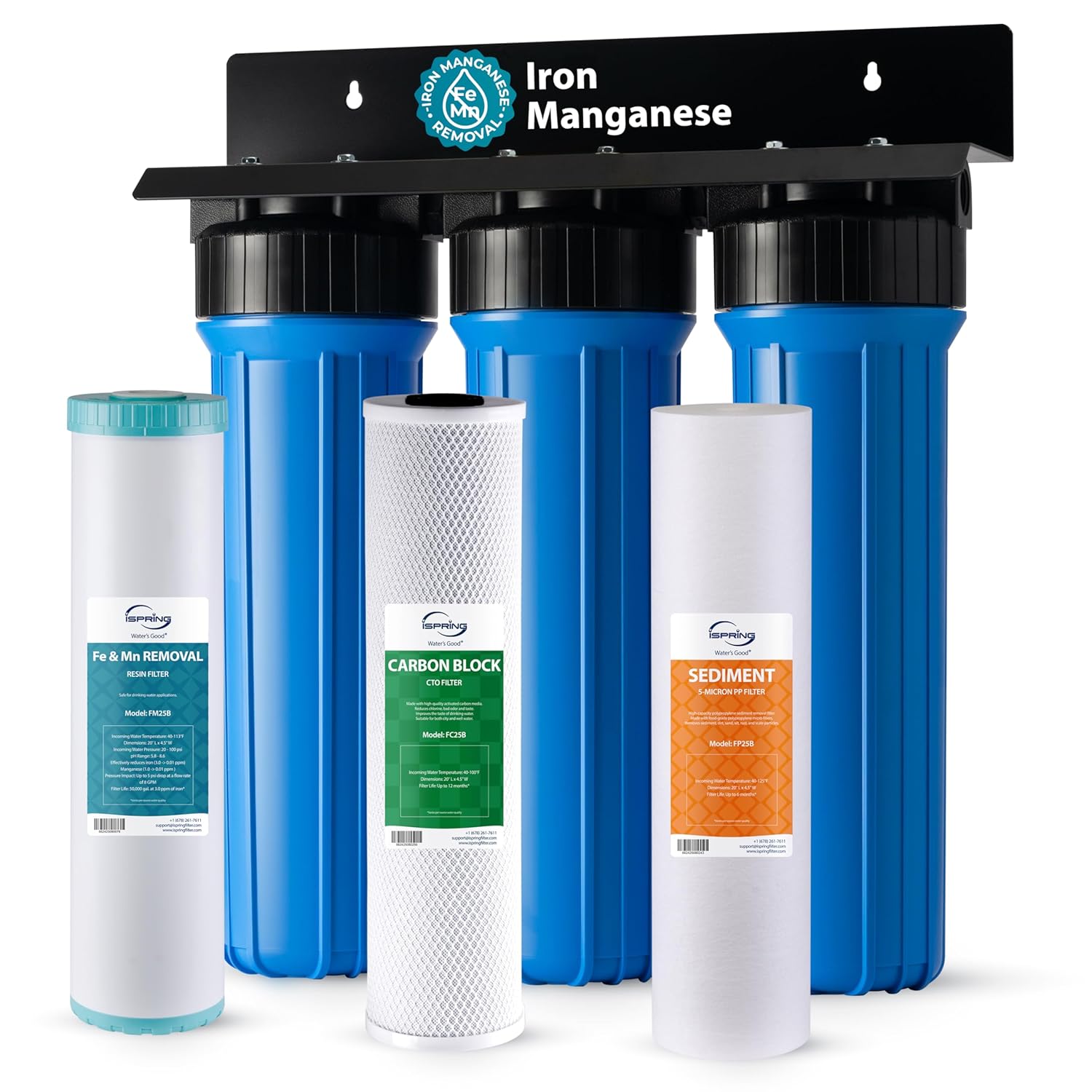
Best for moderate iron and manganese
iSpring WGB32BM
$450 to $650 typical range
Choose it when: Choose it when a lab test shows iron at or below 3 ppm and manganese at or below 1 ppm. It also catches sediment and has a carbon stage for taste and odor.
Skip it when: Skip it for bacteria, hard water, nitrate, arsenic, or a rotten-egg smell. It has no hydrogen-sulfide claim and it is not a water softener.
Home fitWhole house · listed peak flow of 15 GPM · no power or drain for normal filtering
Work you must doChange three large cartridges based on water use, test results, and pressure loss.
Check the iSpring WGB32BM specifications before you buy.
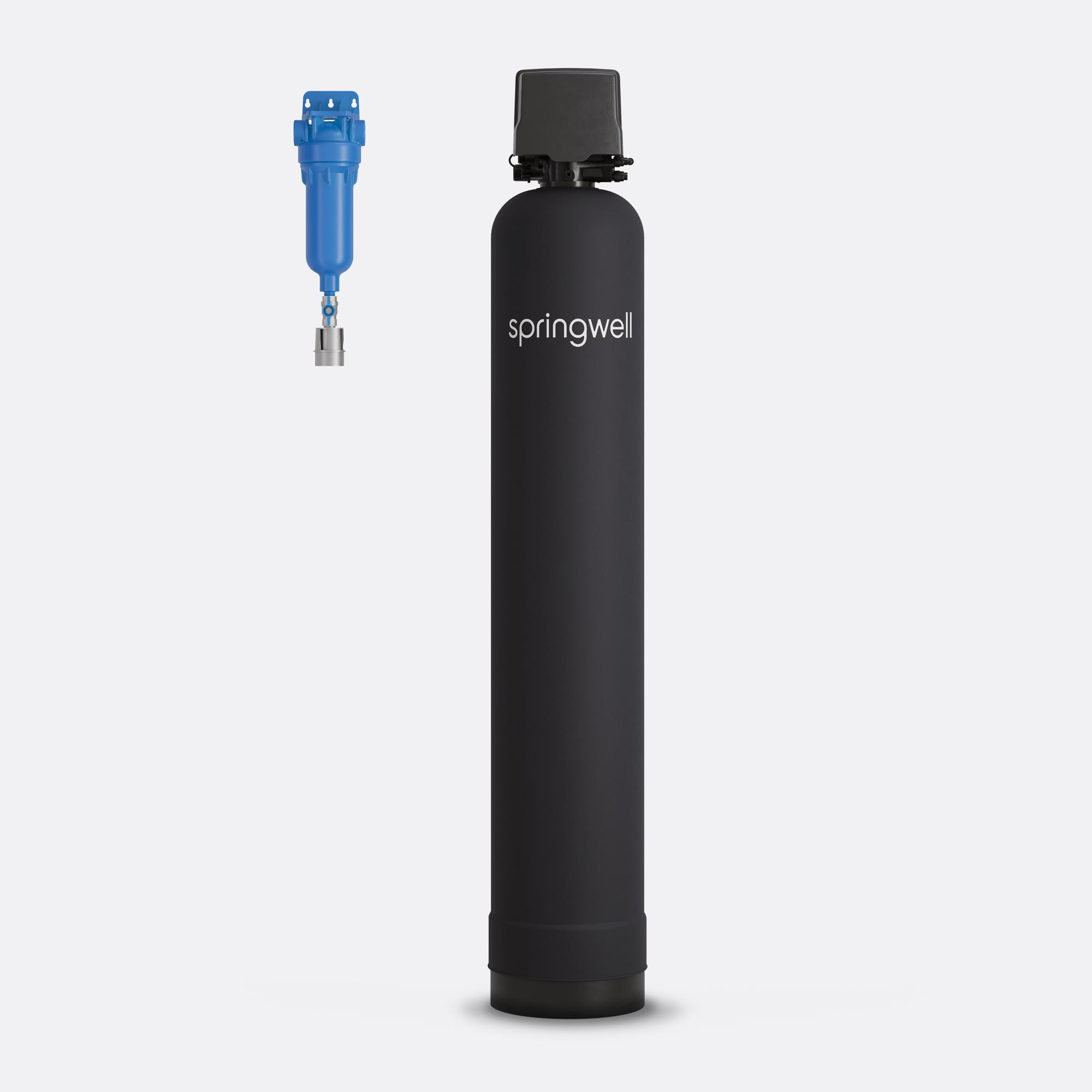
Best premium pick for tested iron, sulfur odor, and manganese
SpringWell WS Whole House Well Water Filter
$2,000 to $3,000 typical planning range
Choose it when: Choose it when a complete well test fits SpringWell’s limits and shows up to 7 ppm iron, 8 ppm hydrogen sulfide, or 1 ppm manganese. Air injection oxidizes the dissolved material, and the media tank catches it before an automatic backwash.
Skip it when: Skip it for a positive bacteria result, nitrate, arsenic, PFAS, or hardness by itself. It needs power, a drain, 25 to 80 psi, pH from 6.5 to 10, and approval of the water test before shipment.
Home fitWhole house · current size guide lists 9, 12, and 20 GPM options · one-inch connection on residential sizes
Work you must doMaintain the drain and control head, protect against freezing, and re-test raw and finished water; media life depends on the actual well chemistry.
Check the SpringWell WS current claims, limits, and size guide before you buy.
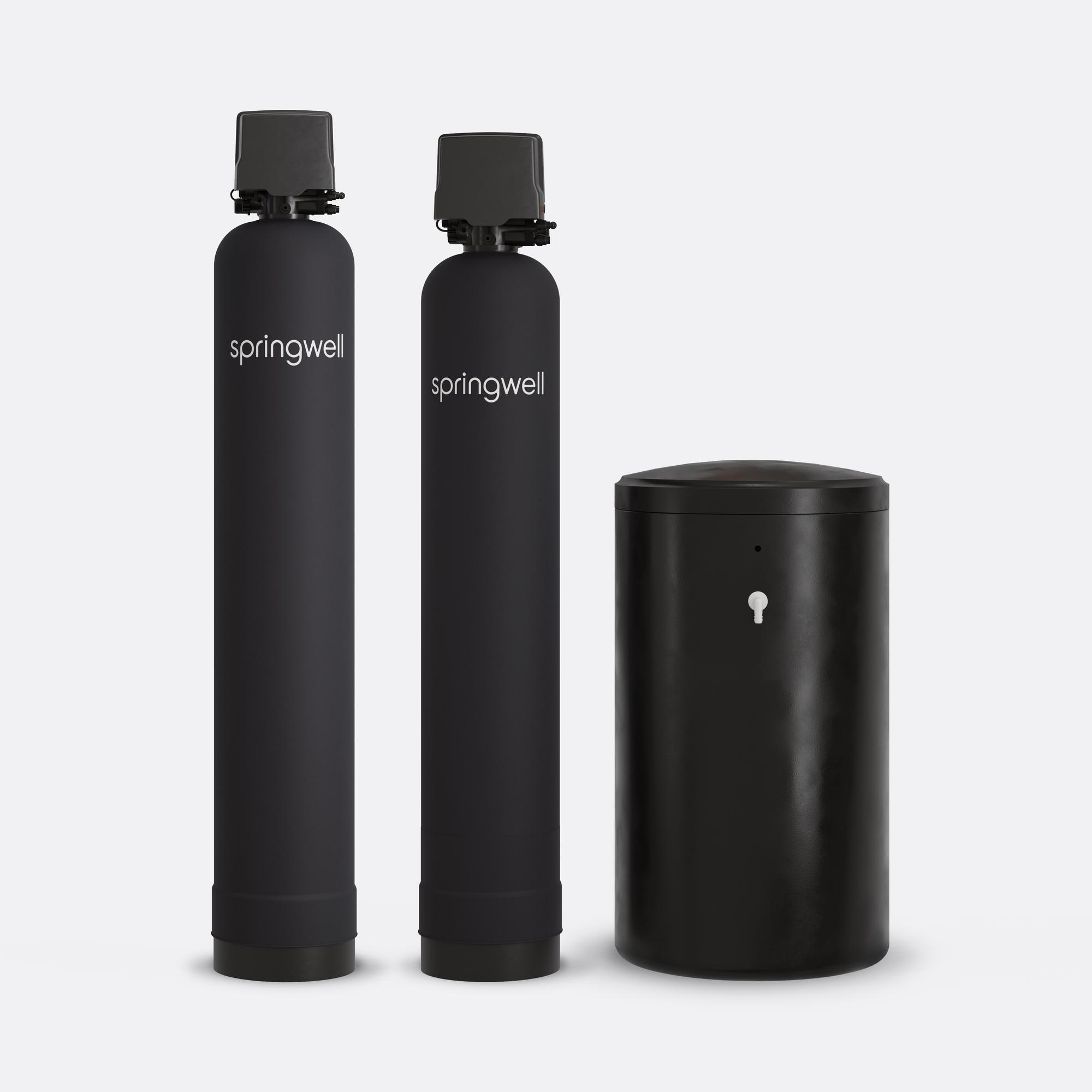
Best premium combo for iron or sulfur plus hard water
SpringWell Well Filter + Salt-Based Softener Combo
$3,100 to $5,000 typical planning range
Choose it when: Choose the combo when the same laboratory report confirms a SpringWell-compatible iron, sulfur, or manganese problem and enough hardness to justify true ion-exchange softening. The oxidation tank comes before the softener so the resin is not asked to do the iron filter’s job.
Skip it when: Skip it if you only have one problem, cannot support two tanks plus a brine tank, or lack power and suitable drain capacity. It still does not disinfect bacteria or remove nitrate, arsenic, or PFAS.
Home fitWhole house · matched oxidation and softener package · size from both peak flow and daily hardness load
Work you must doMaintain automatic backwash, add softener salt, inspect the brine tank, and verify both iron or sulfur treatment and finished-water hardness with tests.
Check the SpringWell WSSS combo specifications and water-test requirement before you buy.
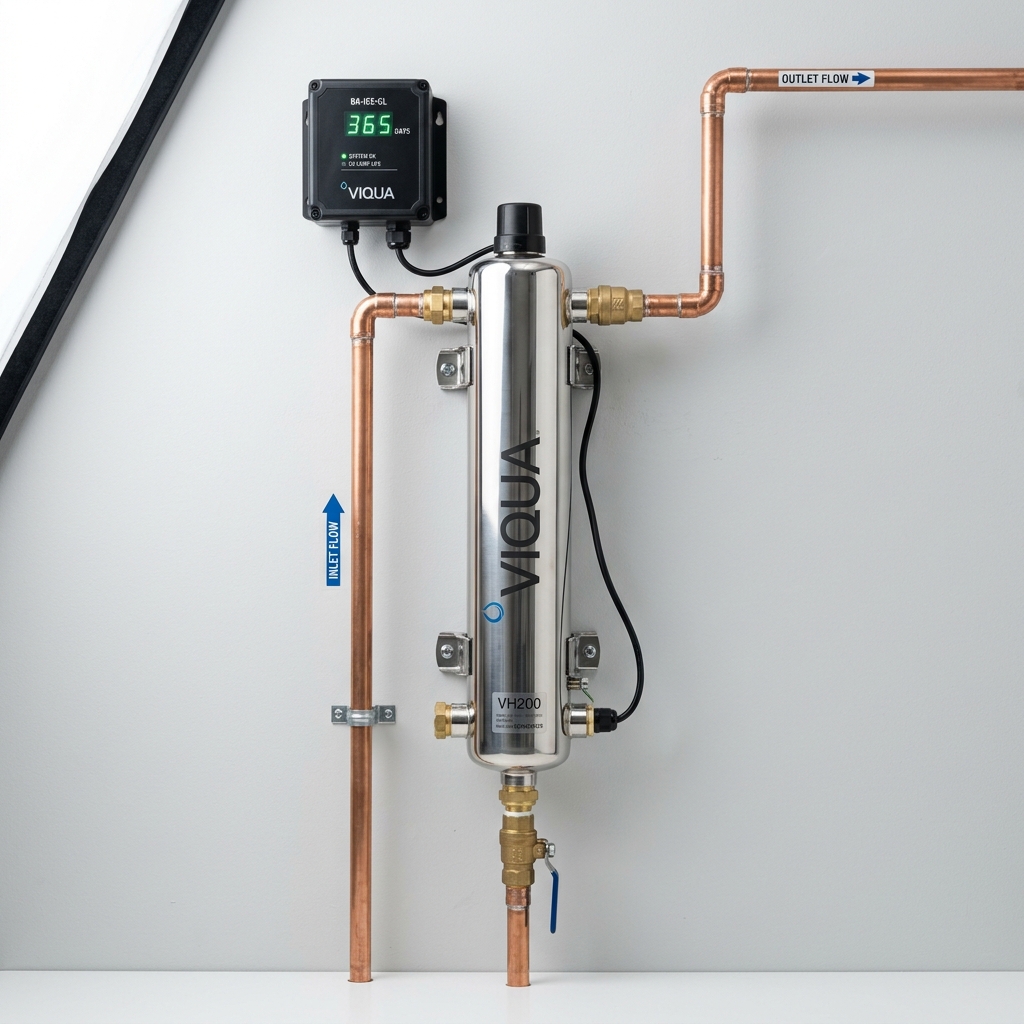
Best for a planned UV germ barrier
VIQUA VH200
$650 to $900 typical range
Choose it when: Choose it when your water-treatment plan calls for UV after sediment, iron, and hardness have been controlled. A trained installer should match the UV dose to your peak flow.
Skip it when: Skip it if you expect UV to remove nitrate, arsenic, PFAS, iron, sulfur, hardness, or sediment. The base VH200 is not the VH200-V certified model.
Home fitWhole house · 9 GPM at 30 mJ/cm² or 7 GPM at 40 mJ/cm², at the listed water clarity
Work you must doReplace the lamp about once a year, clean the sleeve, and respond to alarms.
Check the VIQUA VH200 dose and flow table before you buy.
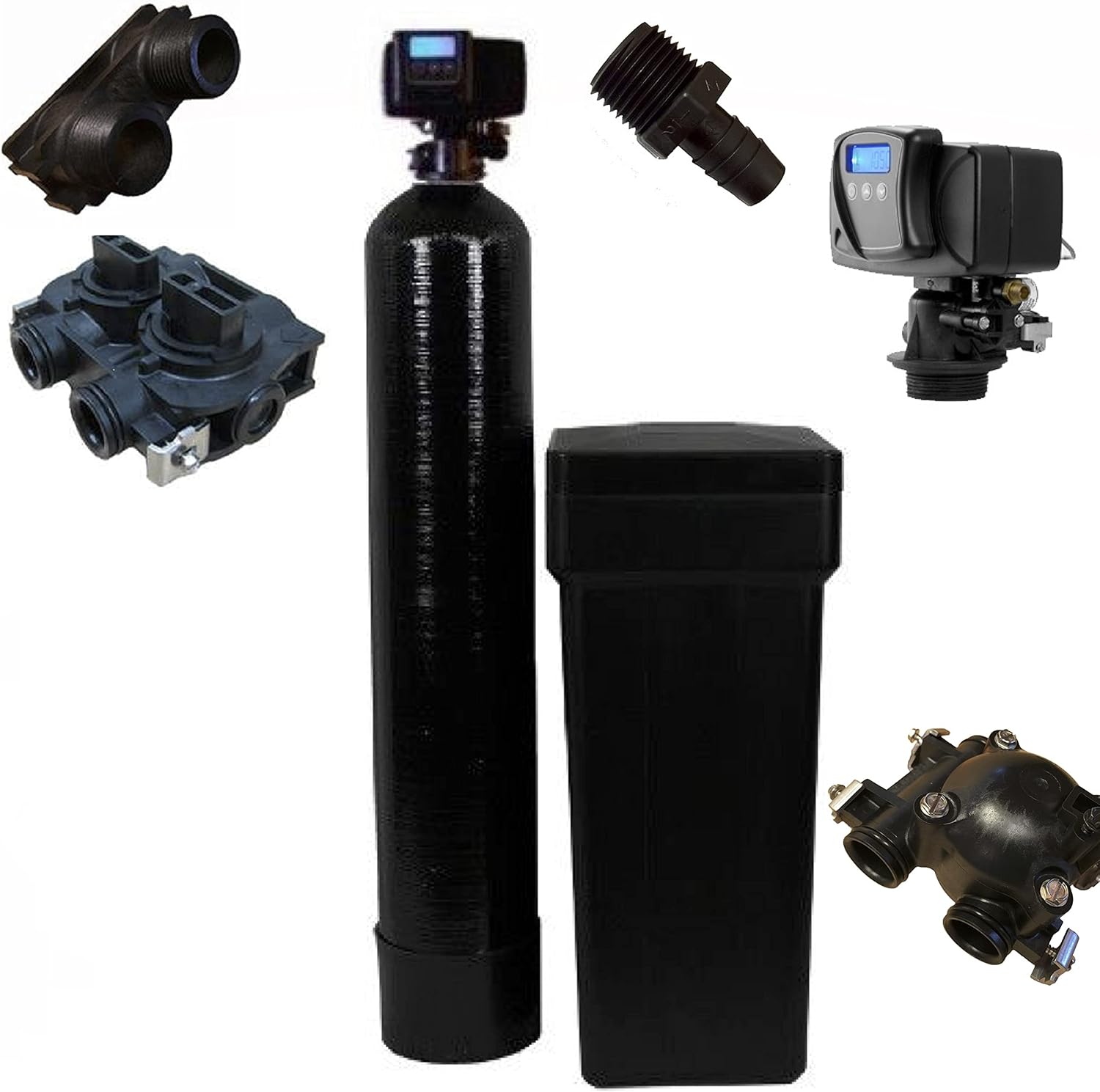
Best for tested hard water
DuraWater 48K with Fleck 5600SXT
$750 to $1,000 typical range
Choose it when: Choose it when a lab test confirms hard water and the home has room for a resin tank, salt tank, drain, and power outlet. It uses real ion exchange to remove hardness minerals.
Skip it when: Skip it as a cure for bacteria, nitrate, arsenic, or an iron problem that has not been measured. The 48,000-grain name is not the same as usable capacity.
Home fitWhole house · size it from hardness, daily water use, salt dose, and reserve capacity
Work you must doAdd salt, check the brine tank, and test the water after the softener.
Check the DuraWater bundle details before you buy.
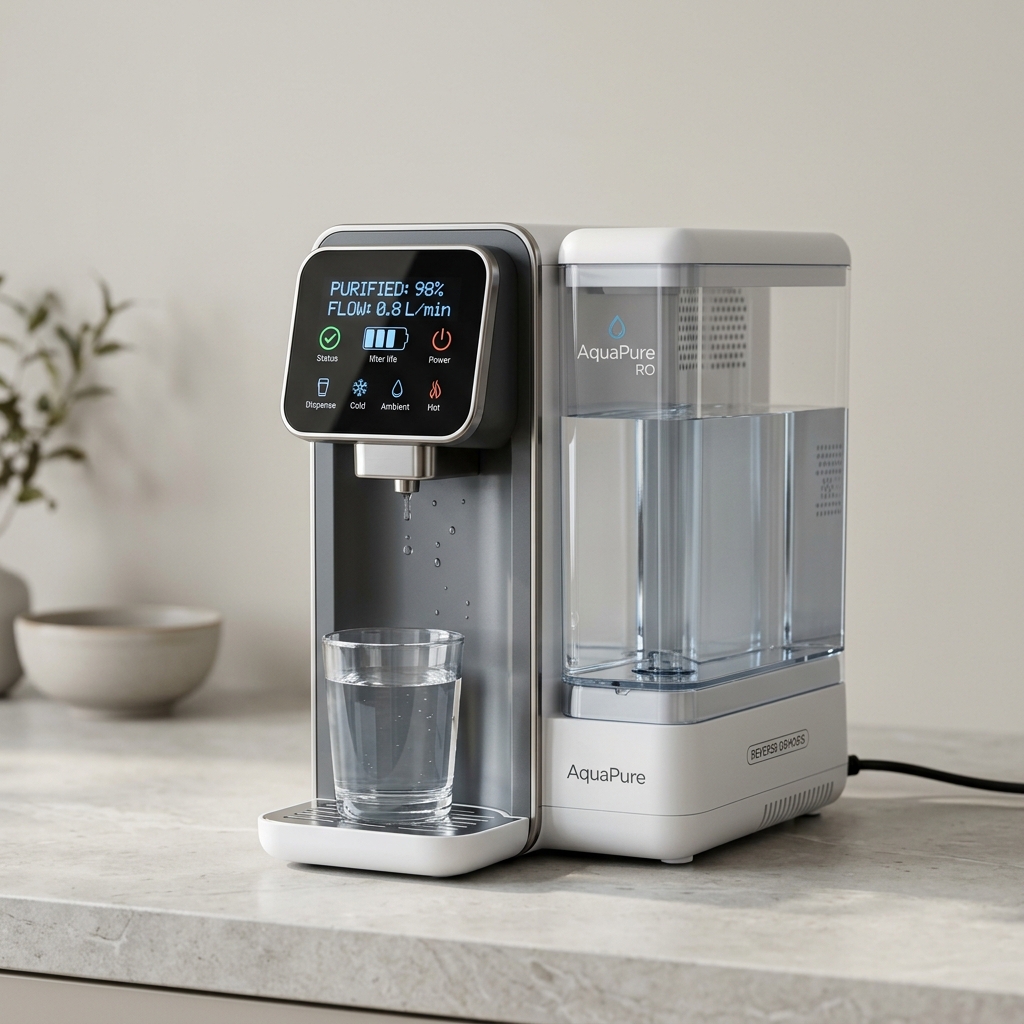
Best for one-tap nitrate or arsenic treatment
AquaTru Classic Alkaline
$400 to $550 typical range
Choose it when: Choose it when the well is already safe from germs and the lab report matches a claim in the exact performance sheet. It treats drinking and cooking water without plumbing work.
Skip it when: Skip it as the only treatment for unsafe raw well water. It does not protect showers, plumbing, or every tap. Its arsenic claim names pentavalent arsenic.
Home fitOne tap · countertop batch system · needs power and manual tank filling
Work you must doWash the tanks, replace filters on time, and test the finished drinking water.
Check the AquaTru Classic performance sheet before you buy.
Pick a size that keeps water moving
Count the fixtures that may run at the same time. Two showers at 2 GPM each, one kitchen faucet at 2.2 GPM, and one appliance at 2 GPM add up to 8.2 GPM. Do not size a system from the number of bedrooms alone.
The WGB32BM lists a 15 GPM peak flow. VIQUA lists 9 GPM at a 30 mJ/cm² UV dose and 7 GPM at 40 mJ/cm² when the water has the stated clarity. Use the flow tied to the dose you need. A bigger number from another test row does not count.
Plan the full cost, not just the box
Cartridge system
Lower starting price. You must buy and lift large filters. Heavy sediment or iron can shorten their life.
Backwashing tank
Higher starting price. It needs power, a drain, and enough well flow to clean the media.
Water softener
Plan for salt, drain water, resin care, and room for two tanks.
UV system
Plan for yearly lamps, sleeve cleaning, power, pretreatment, and water tests.
Ask two installers for written quotes. Each quote should list the exact model, peak flow, treatment limits, stage order, drain needs, warranty, yearly work, and what finished-water result it promises to meet.
Put the stages in the right order
Most treatment goes after the pressure tank. A common order is coarse sediment control, iron or sulfur treatment, a softener, fine filtration, and UV. A kitchen RO unit can come last for drinking water. This is only a starting point. Your water test and each manual decide the final order.
Five mistakes that waste money
- Buying from smell alone. A rotten-egg smell can have more than one cause.
- Buying the base WGB32B for iron. The base model uses sediment and carbon. The WGB32BM is the iron/manganese model.
- Using a softener as a germ filter. A softener removes hardness. It does not disinfect water.
- Using UV for chemicals. UV does not remove nitrate, arsenic, PFAS, iron, or hardness.
- Skipping the final test. Clear water and better taste do not prove the target is gone.
How we checked the facts
We matched each exact model to its current manual, maker specifications, performance sheet, retailer listing, and public-health guidance. We kept certification claims tied to the named model. We also checked the limits that can stop a sale, such as iron level, UV flow, power, drain needs, and whether treatment covers one tap or the whole house.
Useful starting points include EPA private-well guidance, CDC well-treatment guidance, and local health-department advice.
Questions people ask before buying
What is the best water filter for a private well?
There is no one best filter for every well. Start with a lab test. Match each result to the right job: UV for germs, a softener for hardness, iron media for measured iron or manganese, and an exact reverse-osmosis claim for some drinking-water chemicals.
What should I test before buying?
EPA suggests yearly tests for total coliform bacteria, nitrate, total dissolved solids, and pH. Ask your local health department about arsenic, iron, manganese, sulfur, pesticides, fuel chemicals, and other local risks.
What does ppm mean?
PPM means parts per million. For water, it is usually close to milligrams per liter. Use the number from your lab report when checking a product limit.
Which filter removes a rotten-egg smell?
First test the water. The smell may come from hydrogen sulfide, bacteria, a water heater, or plumbing. The WGB32BM in this guide has no hydrogen-sulfide claim. A confirmed sulfur problem often needs a properly sized oxidation and backwashing system.
Does a water softener remove iron?
A softener may handle a small amount of dissolved iron only when its maker and installer allow it. Oxidized iron can coat the resin. Test the iron amount and form before using a softener for that job.
Do I need UV for well water?
Not every well needs UV. Use current bacteria results, the condition of the well, and local health advice. UV also needs clear water, power, correct flow, and regular service.
What happens to UV during a power outage?
The UV lamp stops working. Do not assume water that passed the unit during an outage was treated. Follow the maker and health-department steps before using the water again.
Will a whole-house filter lower my water pressure?
It can. Pressure loss grows when a system is too small or a cartridge becomes clogged. Check peak flow, pipe size, clean-filter pressure loss, and the pressure needed by the home before buying.
How many GPM does my home need?
Add the fixtures that may run at the same time. Two showers, a faucet, and an appliance can use 8 GPM or more. Pick a system that meets that peak at the treatment dose you need.
Should treatment go before or after the pressure tank?
Most treatment is installed after the pressure tank. A common order is sediment control, iron or sulfur treatment, softening, fine filtration, and UV. Your test results and equipment manuals decide the final order.
Can filter backwash go into a septic system?
Do not assume it can. Backwash flow and local rules vary. Ask the septic designer, local authority, and equipment installer before connecting a drain.
How do I know the system is working?
Test the raw water before treatment and the finished water after installation. Test again on the schedule set by the lab, health department, or treatment designer. Taste and clear water are not proof.
Turn your test result into a short list
Use the filter finder to match your water source, test result, home size, budget, and installation limits. Then open the full product page before buying.