Contaminants guide
The Best Water Filters for Lead
Choose Brita Elite for the easiest daily routine, Culligan ZeroWater as a short-term certified bridge, or AquaTru Classic when no-plumbing reverse osmosis fits your kitchen.
The market trap is a standard number without a lead claim. NSF/ANSI 372 means a device meets limits for lead in its own materials. NSF/ANSI 42 may cover taste or particles. Neither statement alone proves that the exact cartridge reduces dissolved lead.
Who should skip product shopping
Skip online comparisons when your utility or health department has issued emergency instructions. Follow that notice first. Water from a private well also needs a certified laboratory test for microbes, nitrate, arsenic, lead, and locally likely contaminants before you select treatment. A lead filter is not a microbiological purifier.
Four rules decide the shortlist
Find the exact lead claim
Match the model and cartridge to an accredited certifier listing or current performance sheet.
Protect the whole water path
An under-sink unit needs a lead-free downstream faucet, while a pitcher treats water after it leaves the tap.
Track gallons and time
Replace the cartridge at the first rated limit you reach, even when taste has not changed.
Plan for source removal
Filtration reduces exposure while a lead service line, solder joint, or fixture is identified and replaced.
What matters when choosing lead filters
Products qualified through an exact lead claim in a current performance sheet or certification record. We then compared rated life, refill work, installation, reject water, and the first cartridge replacement limit.
A peer-reviewed analysis by Kelsey Pieper, Adrienne Katner, Rebecca Kriss, Min Tang, and Edwards in the Journal of Water and Health found that household lead-avoidance choices depend on the site and event. The paper compares filtration, flushing, bottled water, and pipe removal, and reports no commercial conflict of interest.
Three lead numbers that mean different things
| Number | What it describes | How to use it |
|---|---|---|
| 0 ppb | EPA maximum contaminant level goal for lead | Treat any detected exposure as worth reducing |
| 15 ppb | Current system-level Lead and Copper Rule action level | Do not treat it as a safe household cutoff |
| 5 ppb or less | EPA description of the treated-water target for certified point-of-use and pitcher lead filters | Confirm the claim for the exact model and cartridge |
EPA explains the zero health goal, current action level, and household exposure steps. The action level describes a water system response when sampled taps cross a threshold. It does not promise that every unsampled home is below that number.
Three picks with exact lead records
Affiliate disclosure: We may earn from qualifying purchases through retailer links. The comparison method and its limits explain how products qualify. Price ranges allow for normal Amazon offer changes.
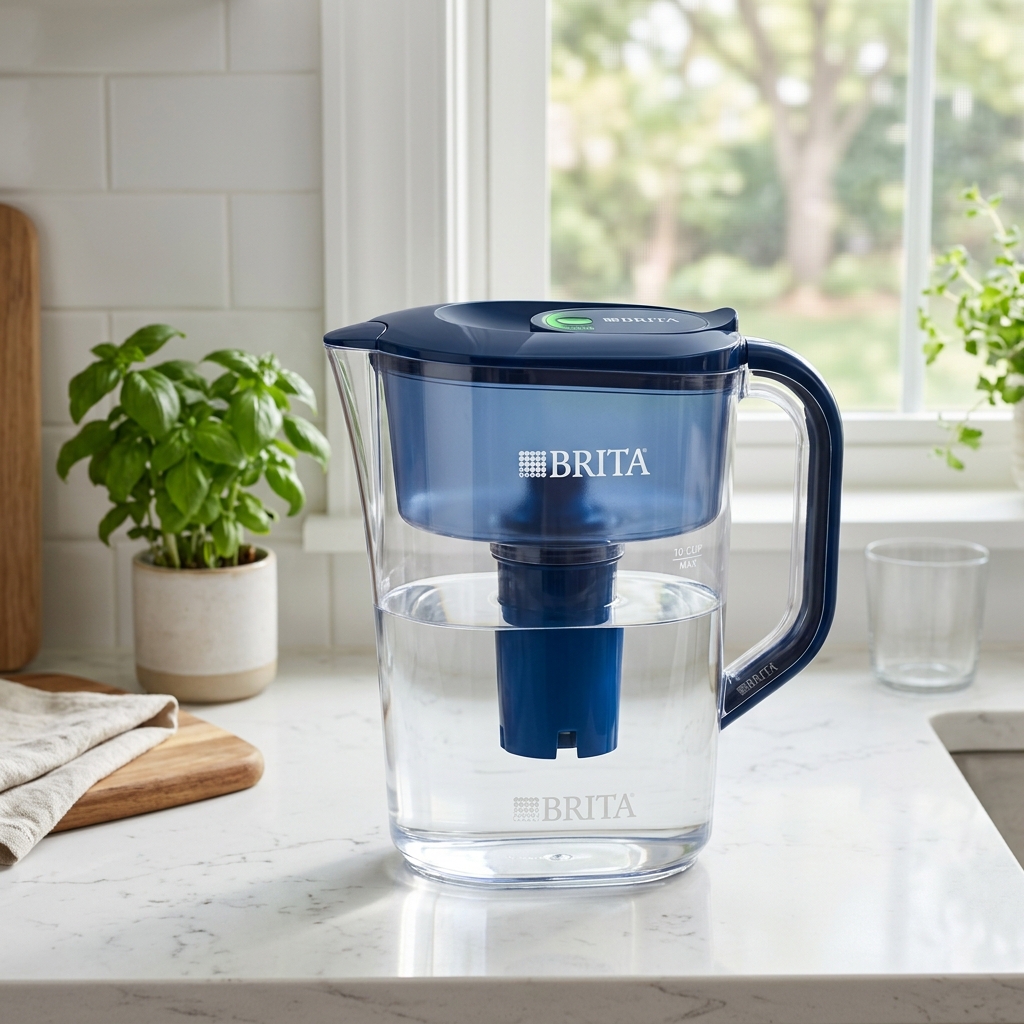
For low-effort daily use
Brita Elite 10-Cup Pitcher
Under $50 price range
Choose the Brita Elite when simple upkeep matters more than speed. The current performance sheet tests lead at both pH 6.5 and 8.5, and the same cartridge also carries a Class I particulate claim.
- Treatment
- Pleated media with active filtering agents
- Lead evidence
- WQA-certified NSF/ANSI 53 lead claim for the OB06 Elite cartridge
- Rated service
- 120 gallons or about six months, whichever comes first
- Setup
- No plumbing, manual refilling
Capacity math. At one gallon per day, 120 gallons lasts about four months. At the maker's two-gallon daily maximum, the gallon limit arrives in about 60 days.
Sale-stopping flaw. The pitcher treats only what you remember to refill, and the maker limits processing to two gallons per day. It is not intended for microbiologically unsafe water.
The model identity and limits come from the Brita Elite 10-Cup Pitcher technical record.
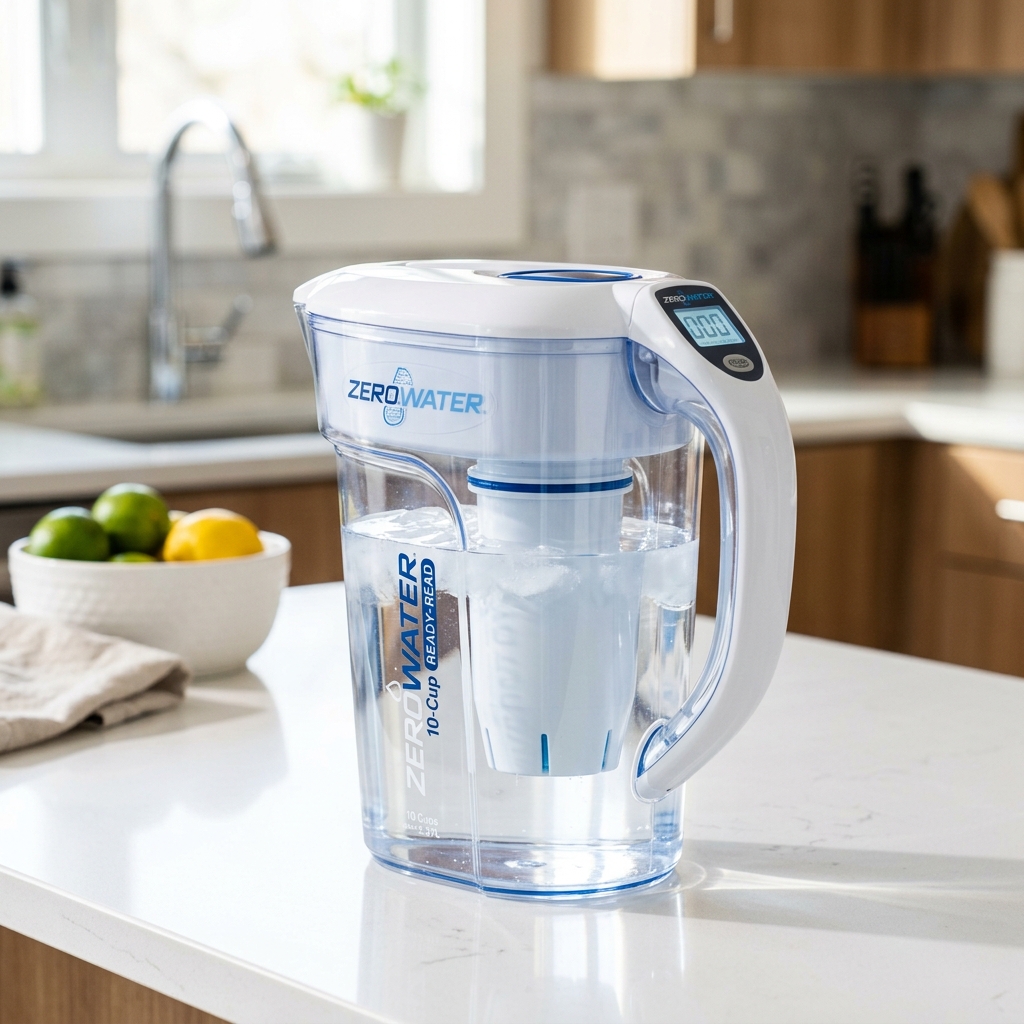
For a short certified bridge
Culligan ZeroWater 10-Cup Pitcher
Under $50 price range
Choose ZeroWater when you need a low-cost device during a service-line notice and can accept frequent cartridge checks. The exact five-stage pitcher system has a model-level lead claim rather than a broad materials badge.
- Treatment
- Carbon, KDF, and mixed-bed ion exchange
- Lead evidence
- IAPMO-certified NSF/ANSI 53 lead claim for the five-stage system
- Rated service
- 15-gallon certified capacity; actual life varies with influent TDS
- Setup
- No plumbing, manual refilling and meter checks
Capacity math. At one gallon per day, the certified 15-gallon capacity covers about 15 days. Higher source-water TDS can shorten practical life, so budget by cartridge rather than by calendar month.
Sale-stopping flaw. Its certified capacity is far shorter than Brita Elite's. The included TDS meter tells you when the ion-exchange media is exhausted, but it does not measure lead.
The model identity and limits come from the Culligan ZeroWater 10-Cup Pitcher technical record.
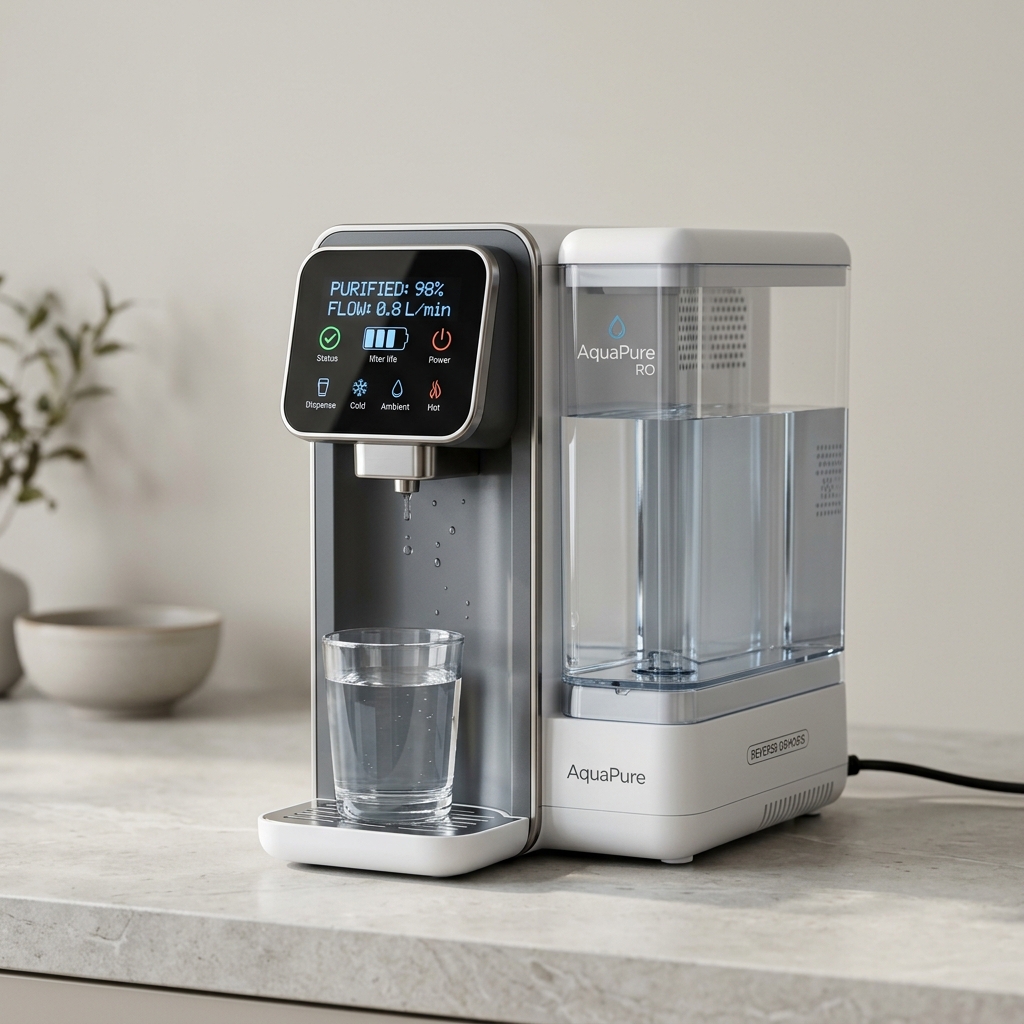
For no-plumbing reverse osmosis
AquaTru Classic
$400 to $500 price range
Choose AquaTru Classic when you want RO for lead plus other dissolved contaminants but cannot alter plumbing. The performance sheet reports 97.5% minimum and 99.1% average lead reduction under its laboratory test conditions.
- Treatment
- Countertop reverse osmosis with carbon stages
- Lead evidence
- IAPMO-certified NSF/ANSI 58 lead claim in the Classic performance sheet
- Rated service
- Six-month prefilter, one-year VOC stage, and two-year RO stage
- Setup
- 120-volt outlet, manual tank filling, no water-line connection
Capacity math. At three gallons per day, the stated 600-gallon prefilter and VOC limits equal about 200 days. The six-month prefilter interval reaches its limit first.
Sale-stopping flaw. The unit takes counter space, needs power, and works in batches. It also produces a reject stream that you must empty, and hardness above 10 grains per gallon can scale the membrane faster.
The model identity and limits come from the AquaTru Classic technical record.
Pick by household constraint
| Constraint | Best fit | Reason |
|---|---|---|
| Lowest recurring work | Brita Elite | Long rated life at modest daily volume |
| Short emergency bridge | ZeroWater | Low entry cost and an exact 15-gallon lead certification |
| Lead plus dissolved salts | AquaTru Classic | RO treats a broader dissolved-contaminant set |
| Known lead service line | Filter plus replacement plan | Treatment lowers exposure but does not remove the source |
Why dissolved and particulate lead both matter
Corrosion can release dissolved lead from service lines, solder, brass, and fixtures. Scale or debris can also carry lead as particles. A strong label therefore pairs a dissolved-lead claim under NSF/ANSI 53 with Class I particulate reduction under NSF/ANSI 42 when the product supports it.
EPA's filter-identification tool shows where to find both claims on packaging and performance sheets. It also lists NSF, IAPMO R&T, WQA, UL Solutions, and CSA as accredited certification routes. A brand logo or the phrase “tested to” is not the same as a certification mark tied to a contaminant claim.
What else cuts exposure
Use only cold tap water for drinking, cooking, ice, and baby formula. Clean the faucet aerator because captured debris can release lead particles. Ask the utility for its service-line inventory and local flushing instructions. A licensed plumber can help identify lead-bearing fixtures and indoor plumbing.
Filters are one layer. A 2018 study of 376 New Orleans homes in the International Journal of Environmental Research and Public Health found that short flushing did not consistently lower lead and sometimes increased measured levels. The authors disclosed public and academic funding, not filter-company funding. Use local guidance instead of guessing a universal flush time.
The water filter matchmaker narrows treatment by water source, household, and installation limits. People who cannot change plumbing can compare renter-safe pitcher and countertop choices. If a report also names PFOA or PFOS, use the separate PFAS filter certification guide because a lead claim does not cover those compounds.
What does not solve lead at the tap
Brita Original OB03 has a 40-gallon performance sheet with no lead row, so its NSF/ANSI 53 label does not make it the Elite lead cartridge. A device marked only NSF/ANSI 372 limits lead in its own materials but does not prove removal. Water softeners target hardness ions. UV systems inactivate microbes. Neither treatment substitutes for a model-level lead claim.
Boiling does not remove lead. A low TDS number also cannot prove that lead is absent because the meter reports conductivity from many dissolved substances together. Confirm the finished-water result with a certified laboratory when a child, pregnant person, or known service line raises the stakes.
Limits that change the verdict
Certification uses controlled water chemistry, flow, and challenge concentrations. Your plumbing can release lead unevenly after stagnation or construction. A cartridge can also be installed incorrectly, used with hot water, or kept past its rated life. Match the exact replacement model, write the change date on it, and retest after plumbing work or source replacement.
Lead filter questions
Does a water filter make lead-contaminated water safe?
A correctly installed, current cartridge with a model-specific lead claim can reduce lead under its rated conditions. It does not remove the lead service line or fixture that caused the problem, so replacement and follow-up sampling still matter.
Can you shower in water that contains lead?
EPA says bathing and showering are generally safe because human skin does not absorb lead in water. The main concern is water that you swallow, including drinks, cooking water, ice, and baby formula.
Does boiling water remove lead?
No. Boiling does not remove lead and may concentrate it as water evaporates. Use cold water and a filter certified for a lead reduction claim.
Is NSF 372 a lead-removal certification?
No. NSF/ANSI 372 addresses lead content in product materials. Look for a model-specific lead reduction claim under NSF/ANSI 53 or 58, plus Class I particulate reduction under NSF/ANSI 42 when available.
Should you use a TDS meter to check for lead?
No. A TDS meter measures the conductivity of dissolved ions as a group and cannot identify lead. Use a certified laboratory for a lead result at the tap.