Buying guide
The Best Water Filter Pitchers
Start with Brita Elite for everyday treated tap water and lower cartridge spending. Pick ZeroWater for a specific low-TDS goal. Consider Clearly Filtered when its lab table matches your concern and the higher running cost fits your budget.
PureWater Filter Finder Research · Updated · 12 min read
We may earn from qualifying purchases. Price ranges are budgets, not live offers. Choose the right model before comparing deals.
What do you want to change?
- Chlorine taste, no plumbing, sensible running cost: start with Brita Elite.
- Want to lower dissolved solids: consider ZeroWater and plan for frequent cartridges.
- Have a specific chemical target in a published lab table: compare Clearly Filtered, while keeping testing separate from certification.
- Several thirsty people or lots of cooking: a larger dispenser or under-sink filter may be easier to live with.
You do not need to remove every mineral to get better-tasting water. Start with taste, a water report, or a named concern—not the longest list of substances on a box. If your concern is lead, EPA explains how to find certified lead and Class I particle claims for the exact system.
Three pitchers, three reasons to buy
Our six buying checks weigh evidence, water fit, setup, upkeep, cost and support. We use plain-language verdicts. A missing warranty detail or a different cartridge generation does not become a guessed score.
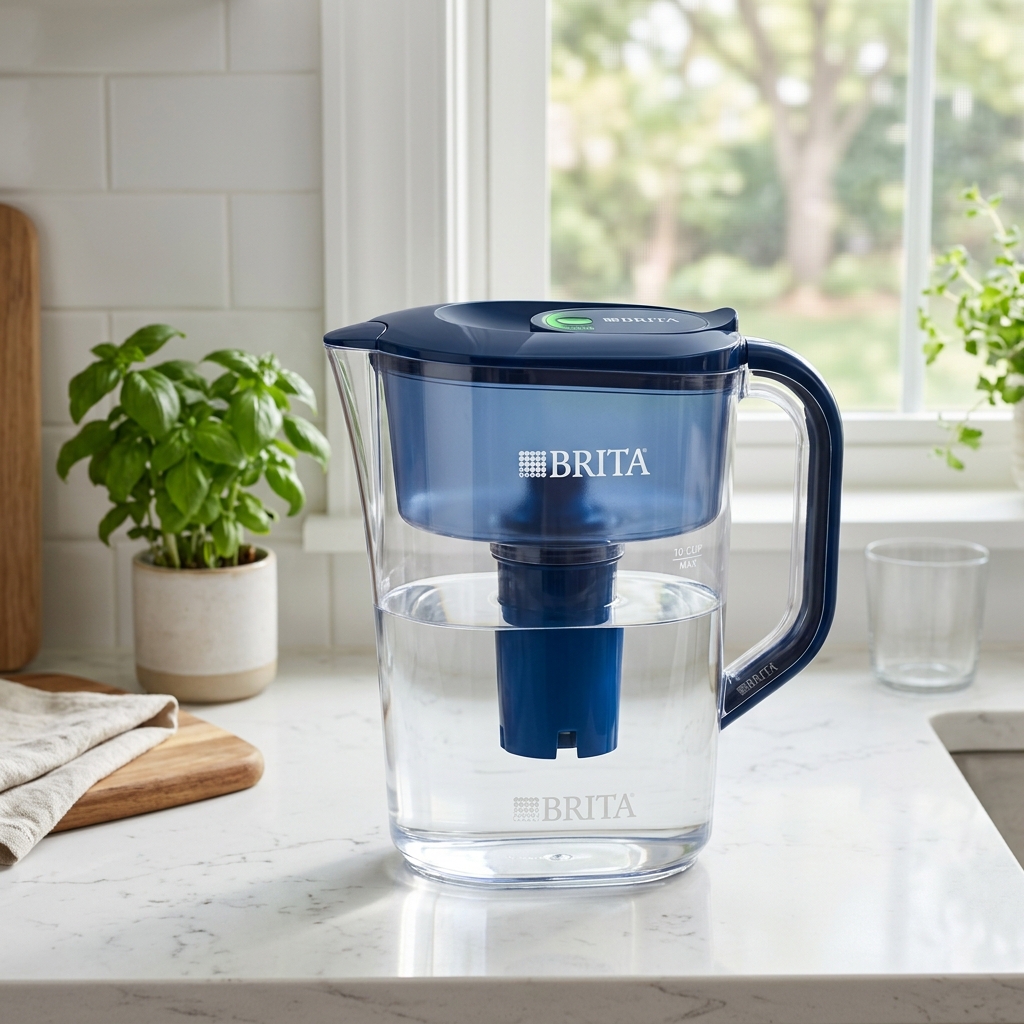
Brita 10-Cup Pitcher with Elite Filter
Typically $35–$60 · equipment only
Elite is the strongest starting point here for a household that wants better taste without a high refill bill. The blue cartridge matters. The cheaper white Original cartridge has different claims and a shorter rated life.
The Elite OB06 sheet lists chlorine, lead and Class I particle claims for specified pitcher models. Its 120-gallon/about-six-month replacement guidance is much more useful than a vague “lasts months” promise. It is not the choice for removing fluoride or every dissolved mineral.
Our buyer-fit assessment
Best starting point for everyday value
Good for: A household that wants better tap-water taste, a long rated cartridge life and no plumbing.
The tradeoff: It keeps many dissolved minerals. Buy the blue Elite cartridge, not an Original cartridge with a different claim sheet.
Before you buy: Confirm the pitcher model appears on the Elite sheet, especially if lead reduction is your reason to buy.
See our six buying checks and sources
Editorial judgments for Cold treated-city-water taste improvement; 1 gallon/day for one year; health claims checked separately by exact pitcher model. These are not lab scores or customer ratings. A missing fact stays unscored; we do not fill it in with a guess.
- Treatment evidence Strong point
- Model-specific sheet lists certified chlorine, lead and Class I particle claims. Check which claims cover the selected pitcher; no blanket all-PFAS promise.Source
- Water and size fit Meets the brief
- Cold potable water; manually filled batches. Not a treatment for an unsafe well or boil-water notice.SourceCompare document
- Setup Meets the brief
- No plumbing or power. Hand-wash, seat the filter and discard startup batches as directed.Source
- Upkeep Strong point
- 120 gallons or about six months, sooner if needed. One gallon daily reaches 120 gallons in about four months.Source
- Long-term cost Strong point
- At 365 gallons/year, a $35–$60 starter kit plus three $15–$25 replacements gives an $80–$135 first-year budget before tax/shipping. The starter is counted once. Not a live offer.SourceCompare document
- Warranty and returns Needs confirmation
- Check the written warranty shipped with the exact pitcher and the retailer return terms; FAQ and linked warranty versions should be reconciled before an overall score.Source
Checked . Assessment applies to 10-cup compatible pitcher + blue Elite OB06 cartridge.
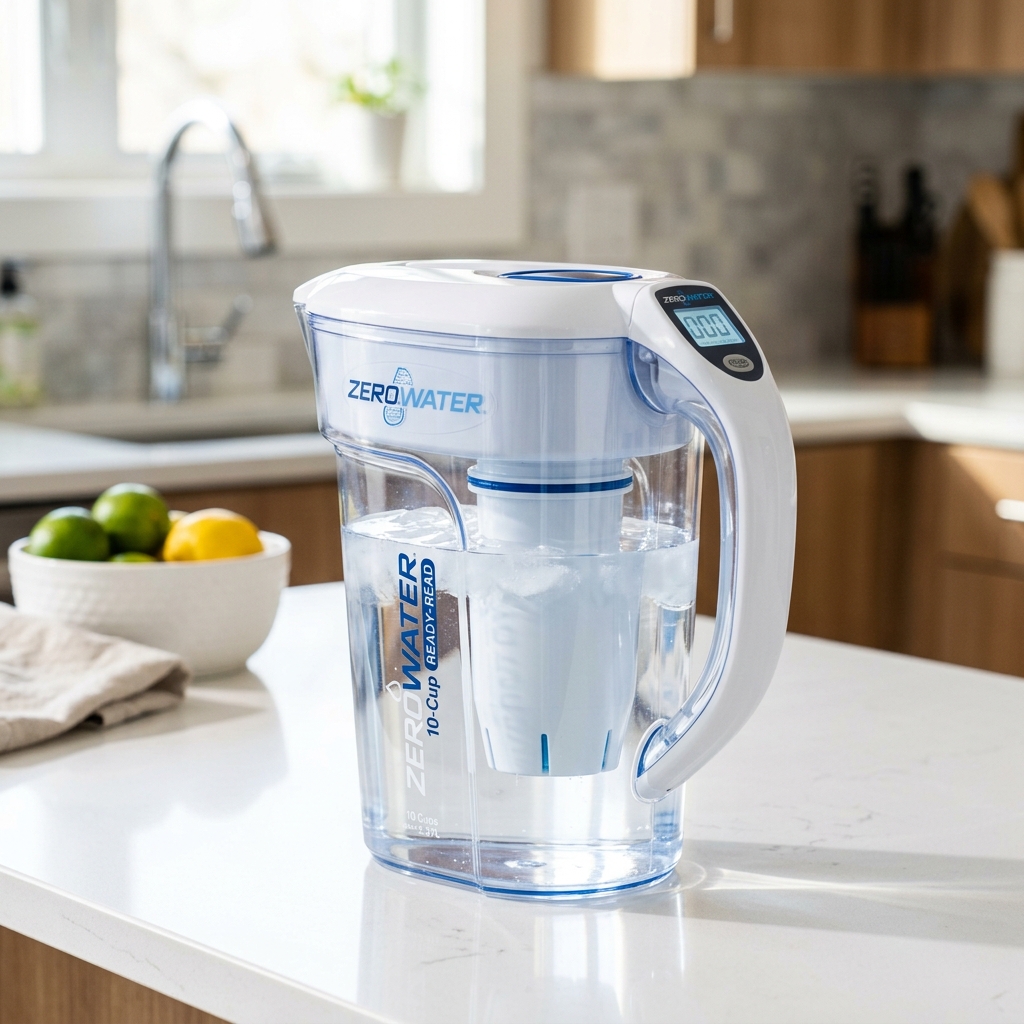
ZeroWater 10-Cup 5-Stage Pitcher
Typically $35–$60 · equipment only
Choose this when low dissolved solids are part of the goal, not because a 000 display looks like a safety certificate. Its small filter removes mineral ions, so water with more dissolved solids can use it up faster.
The ZP-010 manual ties the legacy 5-stage system's certified claims to a 15-gallon capacity. Replace sooner if the meter reaches 006. The newer Culligan ZEROF01 is a different cartridge; its claims and life do not carry over to this older 10-cup model.
Our buyer-fit assessment
Choose for a low-TDS goal
Good for: A renter or small household that specifically wants to lower dissolved solids without plumbing.
The tradeoff: The older 5-stage model has a 15-gallon certified claim capacity. Do not transfer the new Culligan cartridge claims or life to it.
Before you buy: Confirm the exact cartridge and its performance sheet. A low meter reading is not a test for lead, PFAS or germs.
See our six buying checks and sources
Editorial judgments for Cold treated-city-water taste improvement; 1 gallon/day for one year; extra dissolved-solids goal changes the recommendation. These are not lab scores or customer ratings. A missing fact stays unscored; we do not fill it in with a guess.
- Treatment evidence Strong point
- The linked ZP-010 manual contains the certified chlorine and named health-claim table at 15 gallons. Match that cartridge generation, not a newer product.Source
- Water and size fit Meets the brief
- Batch format with a TDS meter; useful for a dissolved-solids goal, not all household water problems.Source
- Setup Meets the brief
- No plumbing or power. Manual filling and meter checks are part of normal use.Source
- Upkeep Tradeoff
- Legacy certified claim capacity is 15 gallons: at 1 gallon/day, at most 15 days by that capacity. Replace sooner at a 006 meter reading or exhaustion.Source
- Long-term cost Needs confirmation
- At 365 gallons/year, 15-gallon capacity needs 25 cartridges from new. Confirm the legacy replacement offer before putting a dollar total on it.Source
- Warranty and returns Tradeoff
- The linked manual lists a 90-day vessel/meter defect warranty and 30-day filter defect warranty; this does not promise filter life.Source
Checked . Assessment applies to Legacy ZeroWater 10-cup 5-stage cartridge; not newer ZEROF01.
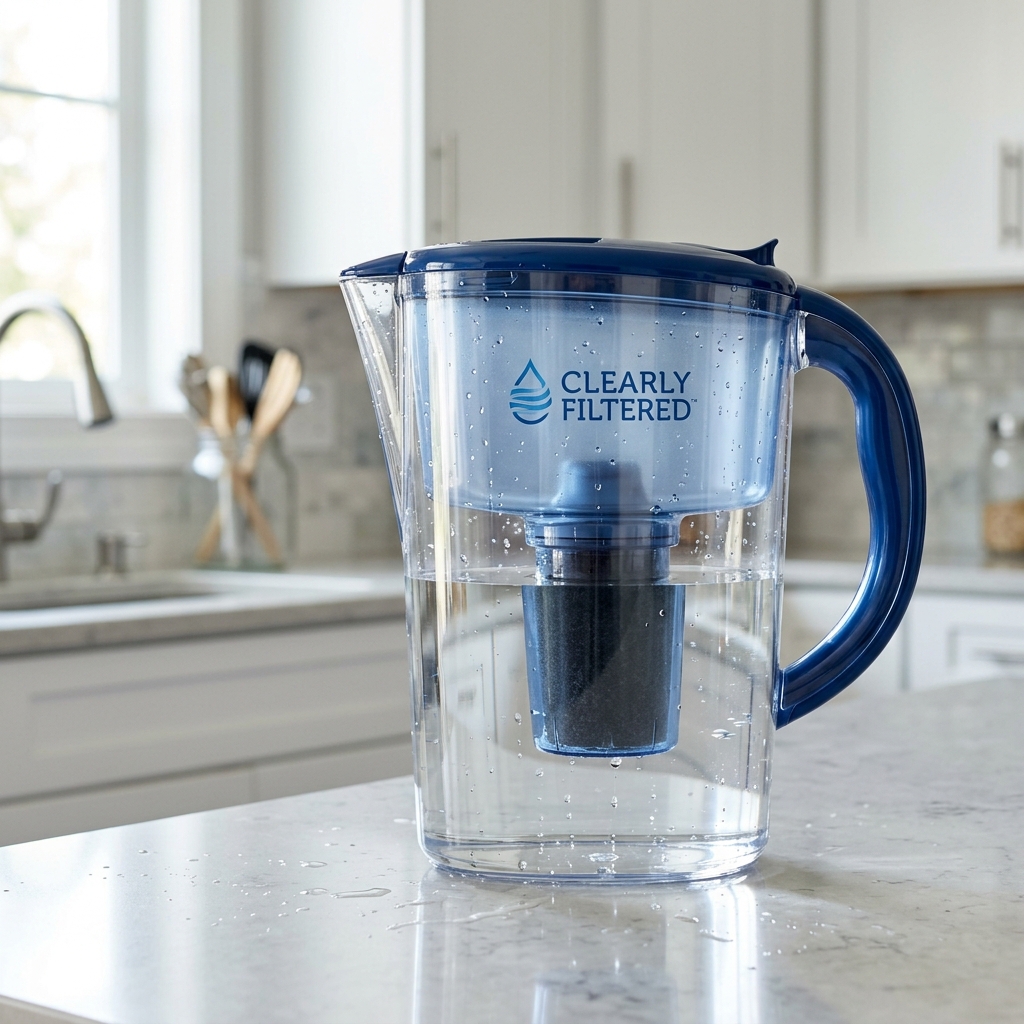
Clearly Filtered P-V3 10-Cup Water Pitcher
Typically $90–$120 · equipment only
The reason to pay more is a particular target in its lab data—not simply the biggest advertised contaminant count. Check your target first, then decide whether a pitcher is the right way to treat it.
The current CF-PRF data lists a 100-gallon rated capacity, NSF 42/372 certification, and a separate broader lab table. That is not certified lead or fluoride removal. The maker specifies municipally treated water and 38–85°F.
Our buyer-fit assessment
Premium option for a named lab-tested target
Good for: A buyer whose specific concern appears in the published test table and who needs a pitcher.
The tradeoff: Broader chemical results are laboratory tests, not NSF-certified lead or fluoride reduction. Check that distinction before paying more.
Before you buy: Check your target in the performance table and budget for compatible CF-PRF replacements.
See our six buying checks and sources
Editorial judgments for Cold treated-city-water taste improvement; 1 gallon/day for one year; additional chemical claims require their own evidence check. These are not lab scores or customer ratings. A missing fact stays unscored; we do not fill it in with a guess.
- Treatment evidence Strong point
- NSF 42/372 certification is separate from the broader lab table. The material lead-content standard 372 does not mean lead removal.Source
- Water and size fit Meets the brief
- For municipally treated water, at 38–85°F. It is not designed to disinfect unsafe water.Source
- Setup Meets the brief
- No plumbing or power; manual filling and filter preparation are still needed.Source
- Upkeep Strong point
- Maker rates the CF-PRF at 100 gallons. At 1 gallon/day, that is 100 days by volume, subject to care and earlier replacement when needed.Source
- Long-term cost Tradeoff
- At 365 gallons/year, a $90–$120 starter kit plus three $50–$70 replacements gives a $240–$330 first-year budget before tax/shipping. The starter is counted once. Not a live offer.SourceCompare document
- Warranty and returns Needs confirmation
- Direct-store returns state 30 days with customer-paid return shipping. Confirm exact warranty and Amazon return eligibility separately.Source
Checked . Assessment applies to P-V3 pitcher with CF-PRF replacement element.
The cheap pitcher can have the expensive refill bill
Count all water used for drinking and cooking. The table assumes one gallon a day, or 365 gallons a year. It uses each published capacity as a planning limit, not a promise of equal treatment or actual household life.
| Filter | Published capacity | Days by volume | Cartridges from new |
|---|---|---|---|
| Brita Elite | 120 gallons | 120 | 4 |
| Legacy ZeroWater | 15 gallons for certified claims | 15 at most by that capacity | 25 |
| Clearly Filtered | 100 gallons, maker rating | 100 | 4 |
The starter filter counts as one. With one starter included, that means buying three more Elite filters, 24 more legacy ZeroWater filters, or three more Clearly Filtered filters in this example. Calendar limits, water quality and care instructions can mean earlier changes.
For budgeting, allow about $15–$25 per Elite cartridge and $50–$70 per Clearly Filtered cartridge. Three extra filters work out to roughly $45–$75 versus $150–$210, plus the pitcher kit. These are planning ranges, not current Amazon offers. Confirm the legacy ZeroWater replacement price and multiply it by 24 before choosing it for daily family use.
At two gallons daily, 120, 15 and 100 gallons last 60, 7.5 and 50 days by volume. This is why daily use can change the best choice more than a small discount on the pitcher.
Will the refill work annoy you?
A ten-cup label is not a ten-cup filter life. Ten US cups are 0.625 gallon. A home using one gallon a day needs at least two full pitcher volumes daily; two gallons needs at least four. Check usable storage, top-reservoir size, fridge shelf height and whether you can pour while water filters.
We have not assigned faster-filtering scores from unmatched tests. If waiting time is your main concern, a larger dispenser stores more finished water, while a plumbed filter removes the hand-filling step. A long cartridge life does not remove the need to wash the pitcher.
A five-minute buying check
- Name the problem: taste, a specific contaminant, or dissolved solids.
- Match the exact pitcher and replacement cartridge to the performance sheet.
- Measure your fridge space and estimate daily drinking and cooking water.
- Price a year of compatible replacements, not just the starter kit.
- Read the chosen seller's return terms; direct-brand policies do not automatically apply to every Amazon offer.
For PFAS, use our exact-claim comparison. For a health concern, a nice taste or low TDS reading is not proof that the target was reduced. These pitchers are not a substitute for following an advisory or testing an unsafe well.
Questions you may ask next
Which pitcher should I start with for everyday tap water?
Brita Elite is our starting point for treated tap-water taste, a long rated cartridge life and lower cartridge cost. Confirm the blue Elite cartridge is included. If you have a named contaminant, match the exact pitcher and cartridge to that claim before buying.
Does zero TDS mean the water is safe?
No. A TDS meter estimates dissolved ionic material. It does not identify lead, PFAS or germs. Use the exact contaminant performance sheet and appropriate lab testing for a health concern.
Why do the old and new ZeroWater filters have different lives?
They are different cartridge generations. The legacy 5-stage filter has a 15-gallon certified claim capacity. Do not use a newer Culligan ZEROF01 rating or contaminant list for the old 10-cup pitcher. Check the replacement model and its sheet.
Does Clearly Filtered have certified lead and fluoride removal?
Its current performance page lists NSF certification to 42 and 372, and separate laboratory results for many other substances. NSF 372 concerns lead content in materials, not removal of lead from water. Broader lab results are not the same as certified lead or fluoride claims.
How many pitchers will I need to fill each day?
Ten US cups equal 0.625 gallon. One gallon daily is at least two full 10-cup volumes, and two gallons is at least four. Actual refill work can be greater because reservoir space and usable filtered storage differ. Choose a larger dispenser or under-sink filter if refilling will become a chore.
Can I put hot water or unsafe well water in these pitchers?
No. Follow each model’s temperature and water-quality limits. These picks are for cold, treated drinking water, not a way to make an unsafe well or water under an advisory safe. Follow your health authority’s instructions.
Do six-month filters always last six months?
No. Volume can reach the limit first, and some water needs earlier changes. At one gallon daily, a 120-gallon rating is about 120 days. At two gallons daily it is about 60 days. Follow whichever limit or replacement instruction comes first.
Still deciding? Start with your home and water.
The finder narrows the choices by water source, space, budget and the problem you want to fix.