Product buying guide
SpringWell Salt-Based Water Softener Review
Buy the SpringWell SS line, usually $1,500 to $2,500 before installation, only when a hardness test confirms the need for true soft water and the home can support salt, power, drainage, and correct programming.
Skip it for an untested private well, mild hardness without a costly scale problem, or any buyer who needs published model-level salt and water efficiency before paying a premium price. It softens water. It is not a general contaminant filter.
Best fit
Measured hard water and a clear need for true softening
Main limit
No published SS model efficiency values or exact certification listing
Stop the sale
No legal drain, no test, or unresolved plumbing details
Verdict for the right house
The SS line earns a qualified recommendation because ion exchange matches the stated goal: remove calcium and magnesium hardness. SpringWell publishes three useful service-flow choices, a metered control head, a bypass layout, and a wide 25 to 80 psi operating range. The system also has real costs in salt, rinse water, floor space, and service work.
The evidence gap keeps this from being an easy premium pick. The current product page says smart regeneration saves salt and water, but it does not state grains removed per pound of salt or gallons used per 1,000 grains. The page and linked manual also disagree on whether the plumbing connection is 1 inch or 3/4 inch. Get the current model sheet, valve identity, connection size, and programmed efficiency in writing before a plumber quotes the job.
How this review was built
Choose the softener size from tested hardness and household water use. Check peak flow, salt and drain needs, service access and total installed cost.
A 2024 community study in Journal of Dentistry measured the highest median sodium level in homes using water softeners among the treatment groups it sampled. The study did not test SpringWell, and its 101-home sample does not predict one buyer's finished-water sodium. It does support keeping an unsoftened drinking tap under consideration when sodium matters.
A separate Water Research study of one domestic softener found that stagnation and regeneration affected bacterial counts. That older study did not test an SS model. Its useful lesson is narrower: maintenance, use patterns, and sanitation matter in any resin tank.
Affiliate disclosure: We may earn from qualifying purchases. Price ranges are planning budgets, not live offers.
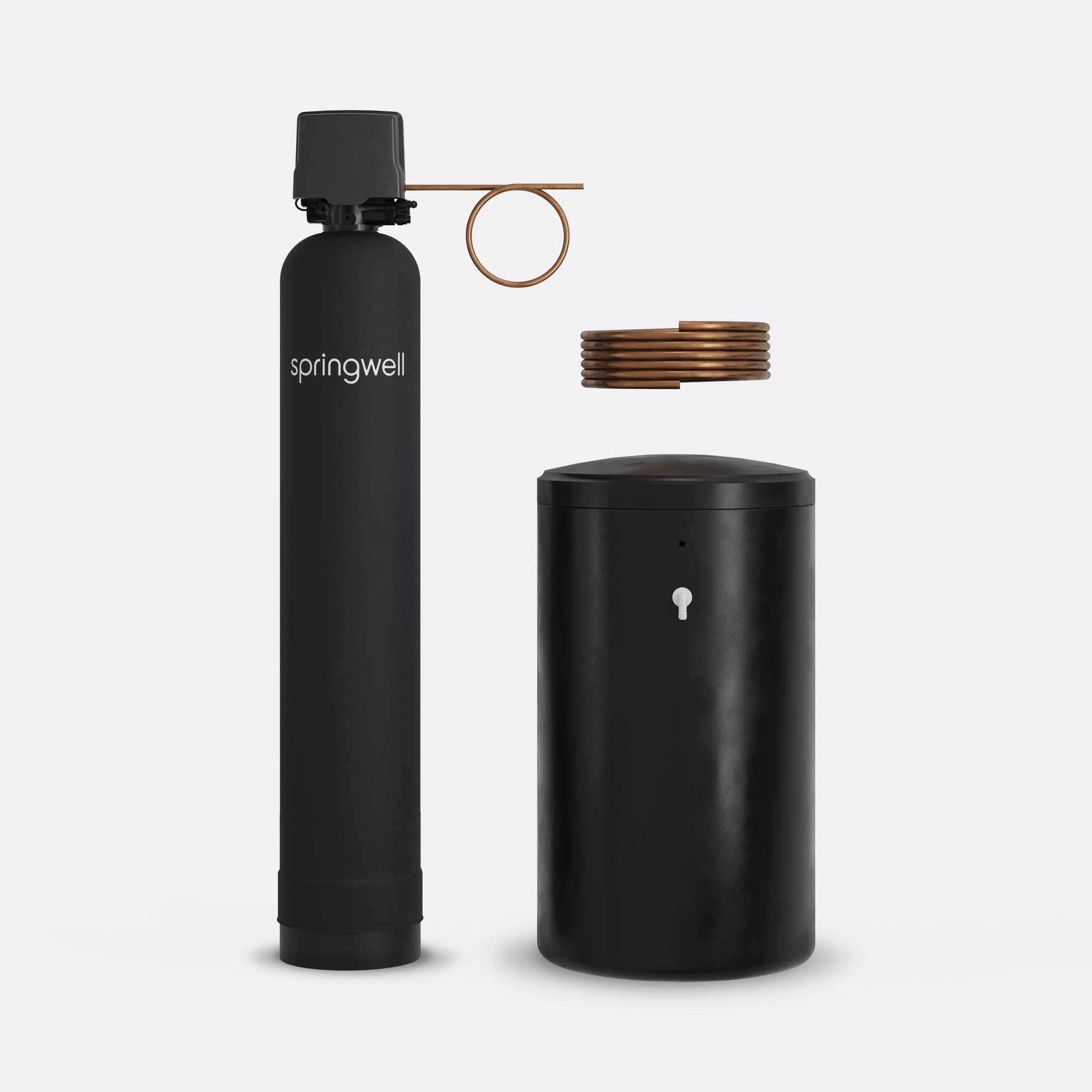
For measured hardness and true soft water
SpringWell SS1, SS4, and SS+
$1,500 to $2,500 planning range before installation
- Capacity labels
- 32,000, 48,000, or 80,000 grains
- Service flow
- 11, 13, or 20 GPM
- Pressure and pH
- 25 to 80 psi and pH 6.5 to 10
- Tank height with head
- 57 inches for SS1; 63 inches for SS4 and SS+
- Brine tank
- 18 inches wide by 33 inches high
- Utilities
- Power, regeneration drain, and overflow route
Why it earns the recommendation. The current SpringWell SS product page gives clear size, service-flow, pressure, temperature, pH, and space labels. The metered valve is a better starting point than a timer that regenerates whether the capacity was used or not.
What could cost the sale. The page does not state useful capacity at each salt dose, water per regeneration, salt efficiency, pressure drop, resin type, or an exact NSF/ANSI 44 listing. Those missing values control operating cost and make comparison with a certified softener harder.
Test six things before choosing a size
Water source
Use the utility hardness result for city water. Use a certified laboratory panel for a private well.
Measured problem
Record hardness in grains per gallon or mg/L. Add iron, manganese, sediment, pH, sulfur odor, and bacteria for a well.
Household demand
Use recent water bills for volume and list fixtures that can run together for peak flow.
Installation limits
Confirm pressure, main-line size, dry floor space, outlet, drain capacity, air gap, overflow route, and service clearance.
Upkeep and budget
Plan for salt, rinse water, brine-tank care, annual checks, plumbing work, and later resin or valve service.
Desired outcome
Choose a softener for hardness removal. Choose separate treatment for contaminants or microbial risk.
Minnesota health guidance says a softener may be useful above 7 grains per gallon, but it also calls the choice personal and warns against an incorrect hardness setting. The state's home-softening guidance also explains when sediment, iron, manganese, or microbial conditions can foul a resin bed. The well-water filter guide starts with a complete laboratory panel before matching any treatment train.
Size capacity and flow as separate jobs
Capacity tells you how much hardness the resin can exchange before regeneration. Flow tells you whether showers and appliances can run together without a poor result. Bathroom count is a shortcut, not a measurement.
| Model | Maker bathroom label | Nameplate capacity | Published service flow | Best reason to step up |
|---|---|---|---|---|
| SS1 | 1 to 3 | 32,000 grains | 11 GPM | Small demand and a measured hardness load that fits |
| SS4 | 4 to 6 | 48,000 grains | 13 GPM | More softened gallons or higher simultaneous flow |
| SS+ | 7+ | 80,000 grains | 20 GPM | Large peak demand that has been measured |
Start with daily hardness load: tested grains per gallon multiplied by gallons that will pass through the softener each day. A house using 240 softened gallons at 15 grains per gallon puts 3,600 grains per day on the resin. That is an example, not a promise about your home. SpringWell's nameplate capacities do not reveal the useful capacity at the chosen salt dose, so ask for the model's capacity and efficiency curve before turning that load into a regeneration schedule.
EPA's 2026 water-efficient softener guide says both hardness and household use determine size, and oversizing wastes water. The same guide favors demand-initiated regeneration and recommends models at no more than 5 gallons per 1,000 grains removed and above 3,350 grains per pound of salt.
The installation needs more than two tanks
The linked SpringWell installation manual requires main-line plumbing, an outlet, a regeneration drain, a brine overflow route, and programming from the actual hardness result. It also warns against well-water installation without speaking to the company first.
- Confirm the connection. The current sales page says 1 inch for all three models. The linked manual says 3/4 inch. A plumber needs the shipped valve and fittings, not a guess.
- Check the drain. The manual lists backwash rates of 2 GPM for SS1, 2.4 GPM for SS4, and 4 GPM for SS+. The drain and air gap must handle the selected model.
- Protect the resin. EPA generally places a softener after treatment for sediment or other contaminants. The iron-filter guide separates oxidation from softening when a well has more than hardness.
- Leave drinking options. An unsoftened cold tap can reduce sodium intake and avoids using salt and rinse water on water that does not need softening.
Salt and water cost cannot be promised
Monthly salt use changes with hardness, softened-water volume, reserve, useful resin capacity, salt dose, and regeneration frequency. The SS manual sets capacity, hardness, reserve, cycle times, and a 14-day override, but it does not state the salt pounds or total rinse-water gallons produced by those settings. A universal annual cost would be invented.
Track after installation
Log untreated and softened hardness, meter readings, regeneration count, bags of salt, drain leaks, and any change in pressure.
Ask before purchase
Request pounds of salt per cycle, gallons per cycle, useful capacity at that dose, certified efficiency, valve model, and pressure-drop data.
SpringWell's own softener maintenance guide calls for monthly salt and leak checks, monthly bridge checks, annual brine-tank cleaning, and closer attention when well water or sediment is present. EPA advises checking salt every 4 to 6 weeks and cleaning resin according to the owner's manual.
Who should buy and who should skip
This softener is a fit only when the water problem, desired result, plumbing, and ownership work all point in the same direction.
Buy when these are true
- Hardness is measured and the household wants lower hardness, fewer spots, and soft-water behavior.
- Peak demand fits one published service-flow label with margin.
- The home has a legal drain, power, space, bypass access, and a salt-handling plan.
- The buyer accepts maker evidence or SpringWell supplies the requested model records.
Skip when one is true
- The goal is PFAS, chlorine, bacteria, sediment, sulfur odor, iron, or another contaminant rather than hardness.
- Local rules restrict brine discharge or the septic provider will not approve the load.
- A medically restricted sodium diet makes fully softened drinking water a poor fit.
- Exact NSF/ANSI 44 certification and published efficiency are firm buying requirements.
The SpringWell SS and FutureSoft comparison explains the salt-free path for homes that only want scale control. The hard-water treatment guide compares ion exchange with smaller point-of-use choices.
Products and claims that do not solve this job
- SpringWell FutureSoft FS1, FS4, and FS+. They can fit a scale-control goal, but they leave calcium and magnesium in the water. Do not buy one for lower hardness or a true soft-water result.
- SpringWell CF1, CF4, and CF+. These city-water filters may protect a downstream softener or solve a chlorine problem. They do not remove dissolved hardness. The whole-house systems guide keeps filtration and softening jobs separate.
- The SS line for untreated well problems. A softener does not replace testing, disinfection, oxidation, or source repair. Follow the manual's well-water caution.
The certification gap changes the value
NSF's technical summary of NSF/ANSI 44 says the standard covers capacity, rinse effectiveness, brine-system accuracy, material safety, structure, pressure drop, and optional salt and water efficiency claims. The current SpringWell product page and linked manual do not identify an exact SS1, SS4, or SS+ listing.
That does not prove the softener fails. It means the public evidence does not settle the comparison that matters at this price. Ask for the certifier, exact model number, listing URL, salt setting, rated capacity, water consumption, and pressure drop. A buyer who requires third-party proof should stop if SpringWell cannot supply them.
Frequently asked questions
Is the SpringWell SS a true water softener?
Yes. SpringWell describes the SS1, SS4, and SS+ as salt-regenerated ion-exchange softeners that remove calcium and magnesium hardness. This is different from a salt-free conditioner, which leaves hardness minerals in the water.
Which SpringWell SS size should I buy?
Do not choose by bathroom count alone. Match the 11, 13, or 20 GPM published service-flow label to measured simultaneous demand, then size capacity from tested hardness and the gallons that will actually be softened. Ask SpringWell for useful capacity at the programmed salt dose before ordering.
How much salt and water does the SpringWell SS use?
The current product page and linked manual do not publish model-level salt efficiency or gallons of water used per regeneration. Use hardness, softened-water demand, regeneration history, and actual salt purchases to track ownership cost after installation.
Can the SpringWell SS treat well water?
Only after a complete well test and a written treatment plan. The linked manual tells buyers not to install on well water without first speaking to SpringWell. Sediment, oxidized iron, manganese, sulfur, bacteria, and low pH may need treatment before the softener.
Does the SpringWell SS remove PFAS, chlorine, bacteria, or sediment?
No such treatment should be inferred from its softening job. The SS line is presented here for calcium and magnesium hardness. Choose separate treatment supported by exact evidence for any contaminant found in a utility report or laboratory test.
What should stop the purchase?
Stop if hardness is not measured, peak flow is unknown, a legal drain or outlet is unavailable, local rules restrict brine discharge, a septic provider objects, or SpringWell will not supply the efficiency and connection details needed for the planned installation.